Bundle Anything & Save
Up to 20% off sitewide
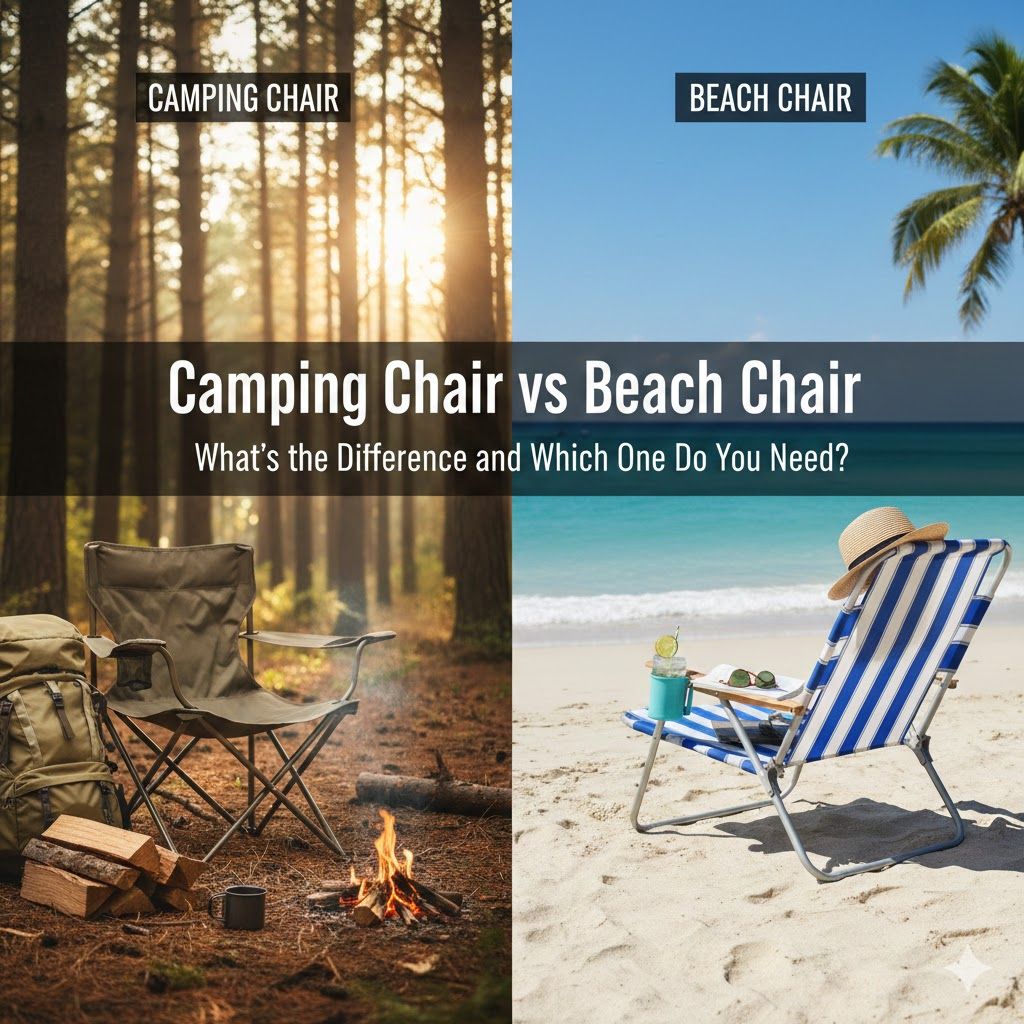
At first glance, a camping chair and a beach chair may look very similar. Both are portable, foldable, and designed for outdoor relaxation.
But if you’ve ever brought the wrong chair to the beach or campsite, you already know — they’re not the same, and choosing the wrong one can seriously affect your comfort.
In this article, we’ll clearly explain the difference between camping chairs and beach chairs, and help you decide which one fits your outdoor lifestyle best.
Camping chairs and beach chairs share several features:
Foldable and easy to carry
Designed for outdoor use
Often similar in price range
However, they are designed for very different environments.
The key differences come down to:
Ground conditions
Sitting posture
Materials and durability
Understanding these differences will help you avoid buying a chair that feels uncomfortable or unstable in real use.
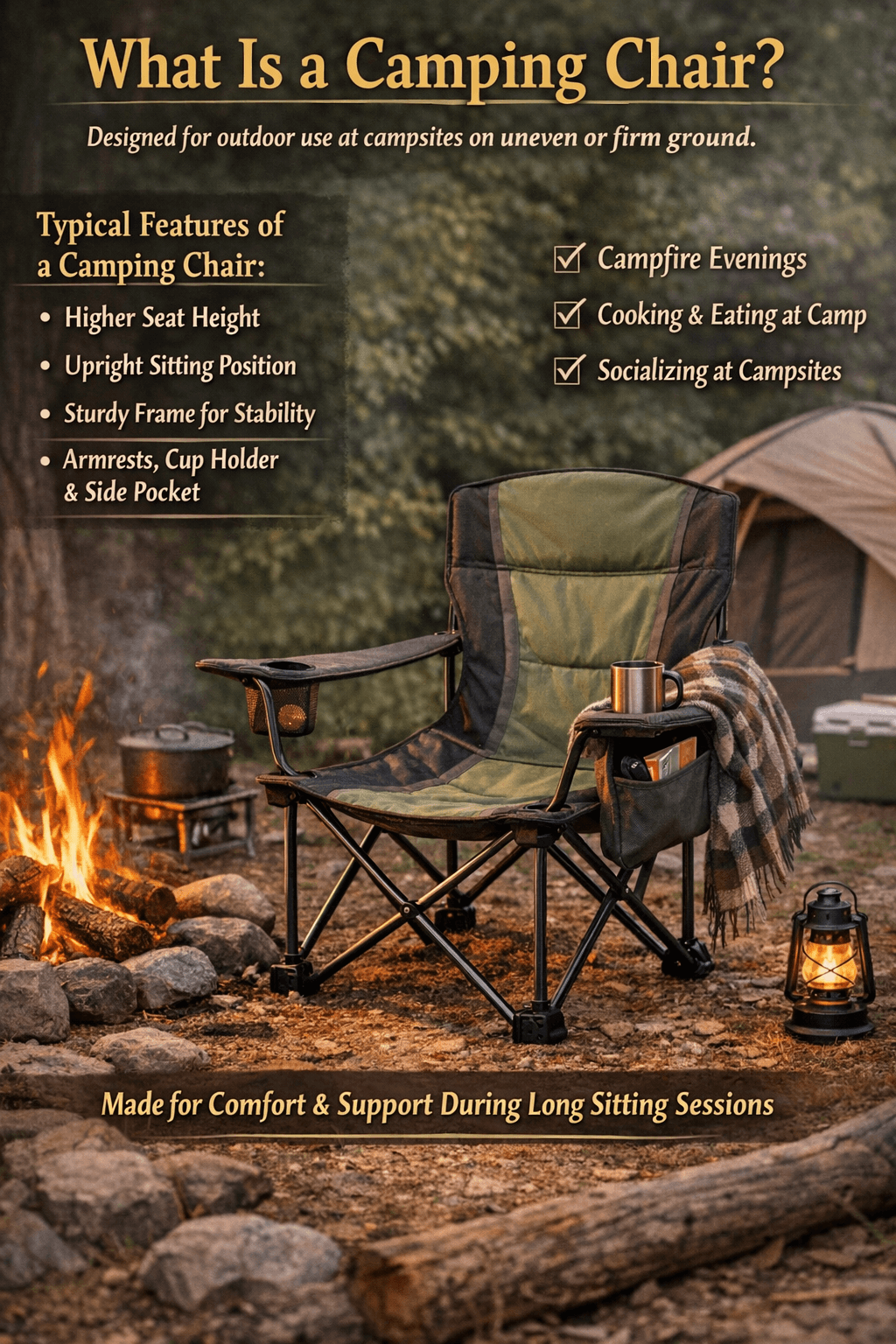
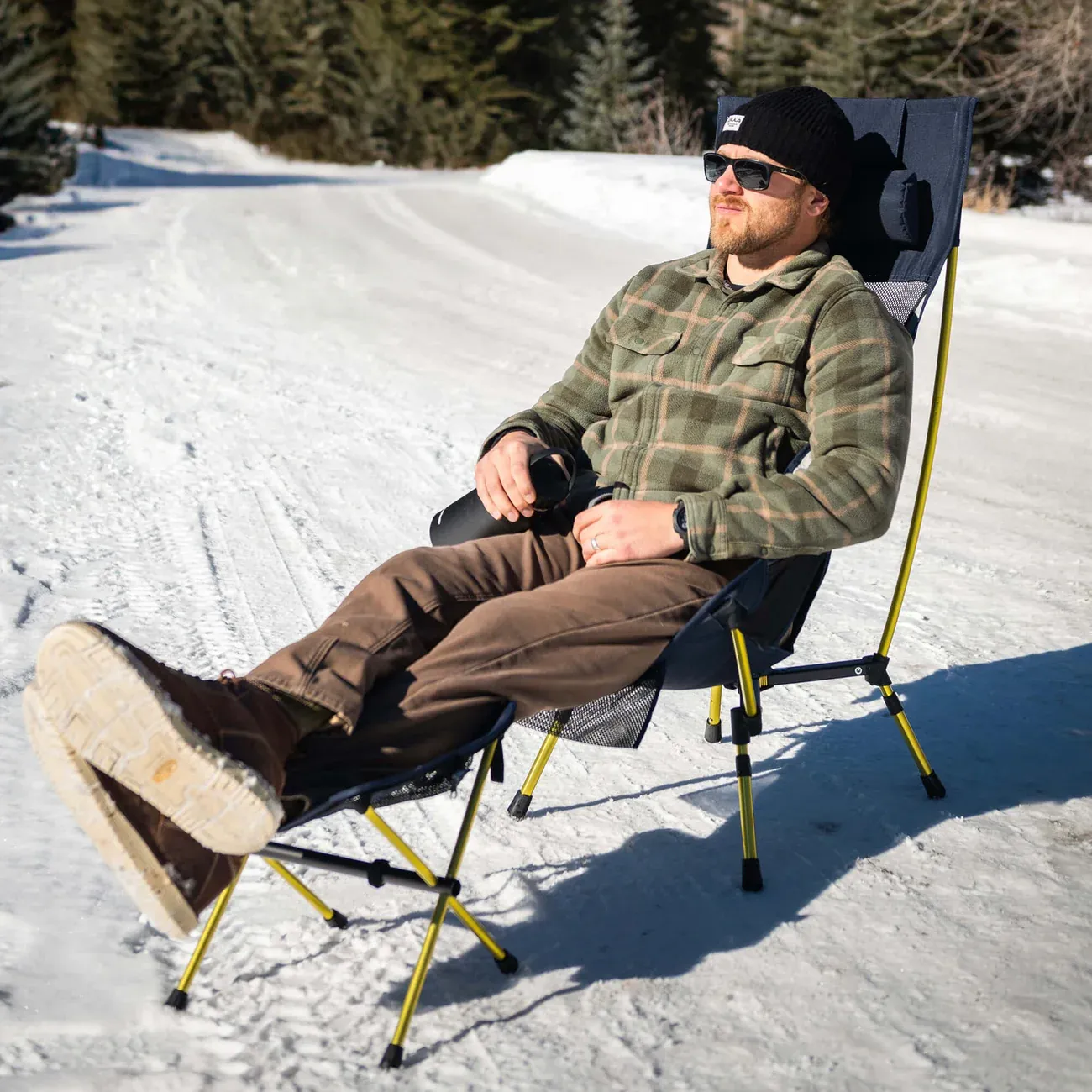
A camping chair is designed for general outdoor use, especially at campsites with uneven or firm ground.
Higher seat height
Upright sitting position
Sturdy frame for stability
Often includes armrests, cup holders, or side pockets
Camping chairs are made for long sitting sessions, such as:
Campfire evenings
Cooking and eating at camp
Socializing at campsites
They focus on comfort and support rather than portability alone.
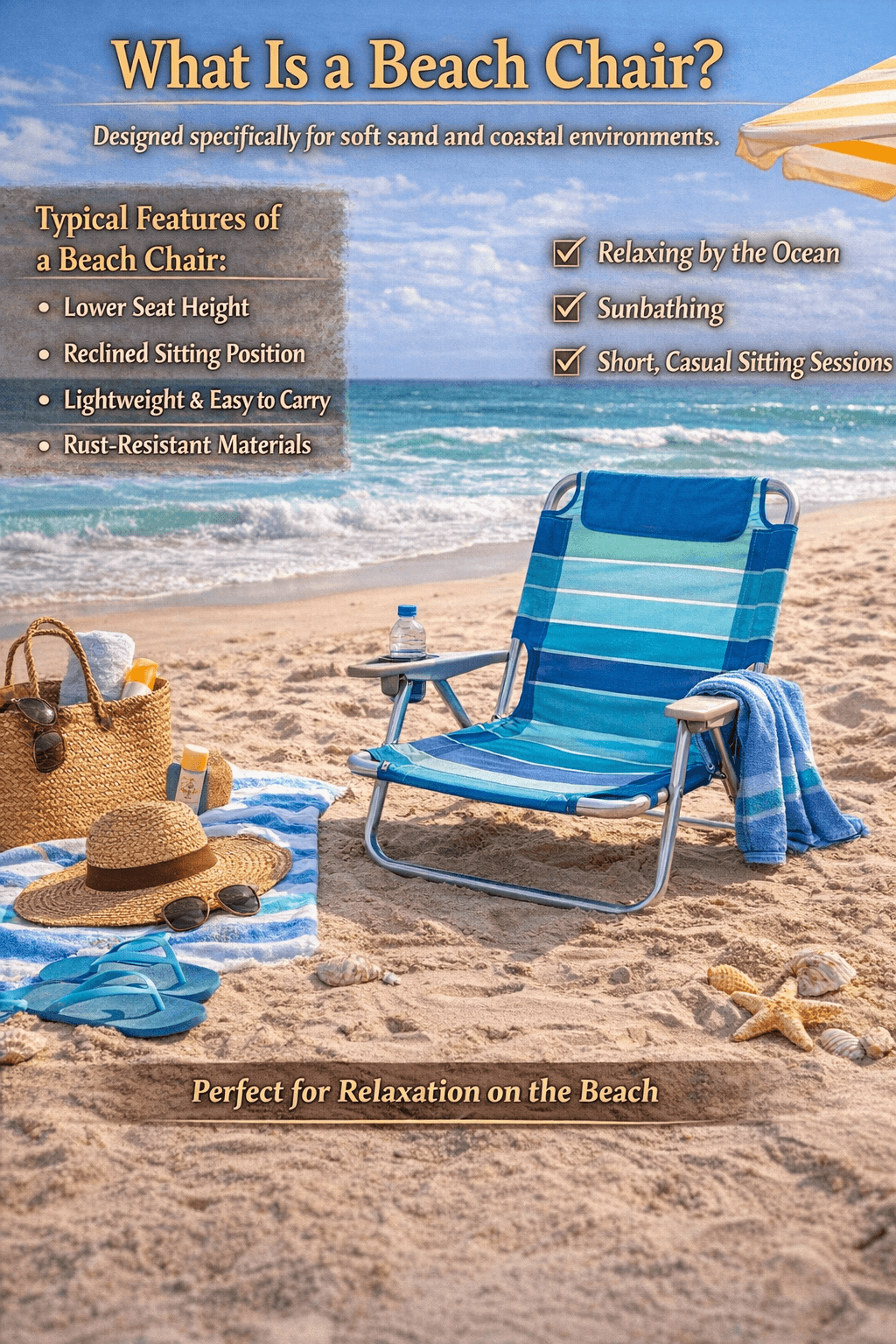
A beach chair is designed specifically for soft sand and coastal environments.
Lower seat height
Reclined sitting position
Lightweight and easy to carry
Rust-resistant materials
Beach chairs are ideal for:
Relaxing by the ocean
Sunbathing
Short, casual sitting sessions
They prioritize ease of transport and sand-friendly design over all-day support.
Camping chairs keep you higher off the ground, making it easier to sit down and stand up.
Beach chairs sit much lower and often recline, which is great for relaxing but less ideal for eating or standing frequently.
Camping chairs perform better on grass, dirt, gravel, or uneven terrain.
Beach chairs are more stable on sand due to wider legs and lower centers of gravity.
Camping chairs may use steel or aluminum frames, optimized for strength.
Beach chairs usually rely on aluminum frames for rust resistance in salty environments.
Beach chairs are typically lighter and easier to carry long distances.
Camping chairs may be bulkier but offer better comfort and support.
You mainly go car camping or campsite camping
You value comfort and back support
You spend long evenings sitting at camp
You camp or relax near the beach or lake
You walk long distances carrying your chair
You prefer a laid-back, reclining sitting style
If you regularly do both camping and beach trips, consider:
Owning one chair for each purpose, or
Choosing a versatile camping chair with rust-resistant materials and wider feet
Using a heavy camping chair on soft sand
Bringing a low beach chair to a campsite dinner
Ignoring corrosion resistance near saltwater
Choosing based on looks instead of usage
The right chair should match where and how you sit, not just how it looks online.
At the end of the day, camping chairs and beach chairs aren't competitors; they’re specialists. Neither is inherently better—they’re just built for different vibes. Once you know how they handle, you can pick the one that actually feels good, holds up in the elements, and lets you focus on what really matters: enjoying the great outdoors.
If you want a broader guide to choosing the right camping chair, you can also read:👉 How to Choose the Right Camping Chair